How to Build an Evening Wind-Down Routine That Actually Helps You Sleep
Sleep does not begin when your head touches the pillow. It begins an hour or two earlier, with a series of small decisions made while you are still upright: how bright the room is, how warm your skin feels, whether your mind has been given a chance to put the day down.
Most wind-down routines fail for the same reason. They are designed for a version of you with more time and willpower than you actually have at ten past ten at night. A routine that works is short, slightly boring, and repeatable on a Tuesday when you are tired and the washing-up is still in the sink.
Choose a Landing Time, Not a Bedtime
Bedtimes are unreliable. You can decide to be asleep by eleven and still be staring at the ceiling at midnight. A landing time is different: it is the moment you stop doing the day and start closing it down.
Work backwards from when you need to wake up, then pick a landing time roughly ninety minutes before you want to be asleep. Set a gentle alarm for it if you need to. The point is not that a bell should order you about, but that the evening gets a starting gun rather than drifting until you collapse.
What matters more than length is order. Doing the same three or four things in the same sequence every night teaches your body what comes next. Ten minutes, every night, beats an hour on Sunday. If it helps, anchor the first step to something you already do — after the kitchen is wiped down, after the dog's last trip outside, after the children are in bed.
Turn the Lights Down Before You Turn Them Off
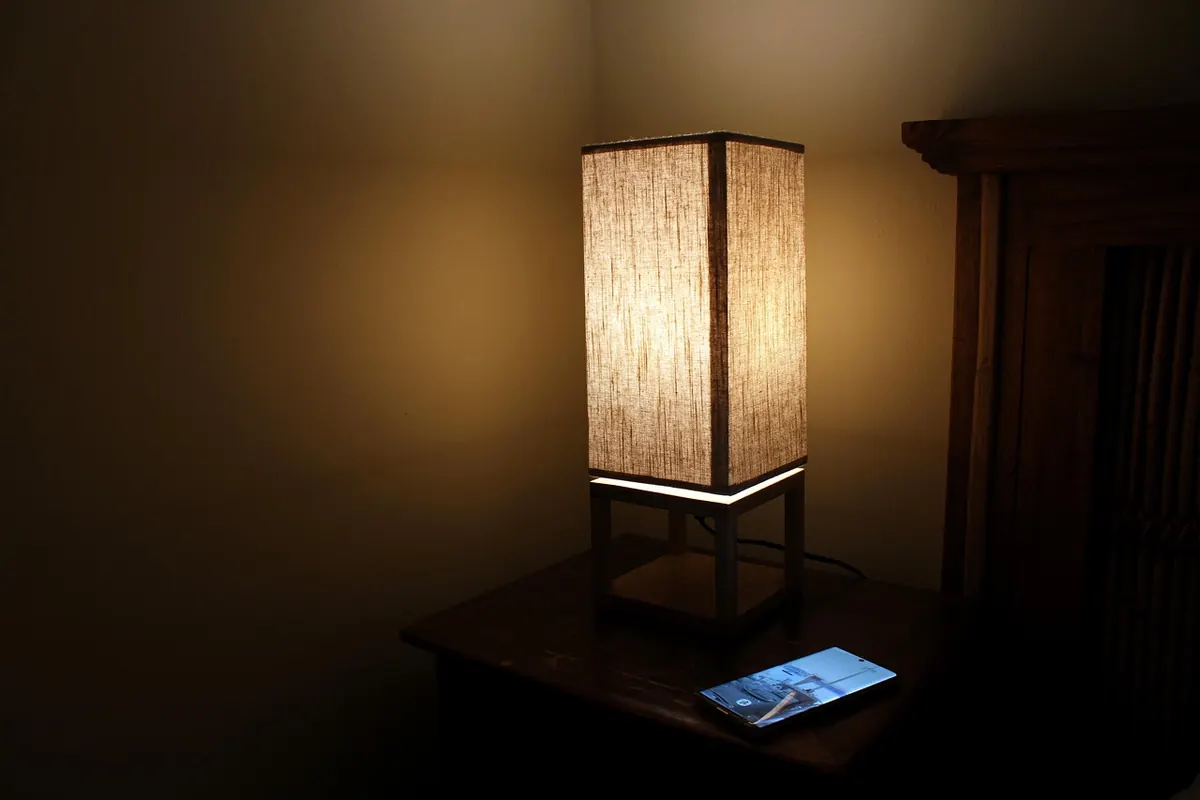
Light is the most powerful signal you have. Bright light in the evening tells the body it is still daytime, which delays the point at which you feel sleepy. You do not need to sit in gloom, but you can be deliberate about it.
- Switch off overhead lights once it is dark outside and use lamps instead.
- Choose warm, low-wattage bulbs — the orange end of the spectrum, not the bright white.
- Turn the bathroom light down, too, or use a small night light for the last hour.
- Keep the bedroom dark enough that you cannot see your own hand clearly. Blackout curtains help in summer.
The morning half of this matters just as much. Open the curtains as soon as you wake, and if you can, get outside within an hour. Ten minutes of daylight on your face at the start of the day makes the evening wind-down far easier, because the contrast is what your body clock reads.
Cool the Room, Warm the Body
Your core temperature has to fall for sleep to arrive, so a warm bedroom works against you. Many people sleep best in a room somewhere around 16–18°C, with breathable cotton or linen bedding and a window cracked open for a little moving air. If you sleep with a partner who feels the cold differently, layers on the bed solve more arguments than a thermostat does.
The useful trick is a warm shower or bath sixty to ninety minutes before bed. The heat draws blood to your skin, and as you cool down afterwards your core temperature drops with it. That is why a bath can feel genuinely sedating rather than just pleasant.
Warm feet help, too. A pair of socks in bed, or a hot water bottle at the foot of the mattress that you remove before you settle, can make the difference on a cold night.
Give Screens a Curfew — and Something to Do Instead
Blue light gets most of the blame, but the bigger problem is usually arousal. Email, group chats, a comment thread that winds you up, one more episode because the last one ended on a cliffhanger: none of that is a signal to slow down.
Two questions are enough. When does it stop, and what is the screen being used for? Aim for a cut-off about an hour before bed, and after that keep the phone to genuinely useful things — music, an alarm, a call to family.
Make the curfew easy to keep. Charge the phone in another room. Buy a cheap alarm clock so there is no reason to have it beside you. Turn on greyscale, silence notifications, and if someone might genuinely need to reach you in an emergency, tell them to ring rather than message.
Low-effort swaps that work
- A paper book or magazine — the kind you can put down mid-page.
- An audiobook or slow podcast with a sleep timer, at low volume.
- Ten minutes of stretching or a few slow rounds of breathing.
- Something with your hands: cross-stitch, a jigsaw, sketching, knitting.
- A second warm drink, decaffeinated, in a proper cup.
Write It Down So You Stop Rehearsing It
Journaling helps most when it has a job to do. Free-form pages about your feelings can turn into a rehearsal of everything that went wrong, which is not restful. Try three short prompts instead:
- What actually happened today, in a line or two?
- What is still unfinished, and who or what is it waiting on?
- What is the first small step tomorrow?
Bullet points are fine. Spelling is irrelevant. The aim is to move a looping thought out of your head and onto paper, where it can be dealt with in daylight. Keep the notebook and a pen by the bed, so if you wake at three in the morning you can scribble the thought down and stop holding it.
Let Scent Do the Signalling
Smell reaches the parts of the brain tied to memory and mood faster than almost any other sense, which makes it a useful cue. The trick is repetition: use the same scent at the same point in the routine, night after night, until the smell itself starts to mean we are winding down now.
Lavender is the obvious choice, but bergamot, chamomile, cedarwood and sandalwood all work well in the evening. Try a diffuser for twenty to thirty minutes, a few drops on a tissue tucked into the pillowcase edge, a pillow mist, or a couple of drops in a warm bath. Air the room afterwards rather than leaving the diffuser on all night.
A sensible note: essential oils are concentrated and not risk-free. Never swallow them, always dilute before putting them on skin, and keep them away from pets and small children. If you are pregnant or breastfeeding, have asthma or another respiratory condition, or take regular medication, check with your GP or pharmacist before using them.
Put the Pieces in Order
Here is a routine you can copy and then trim to fit your evening. Adjust the timings freely; the sequence is what counts.
- Ninety minutes before bed: overhead lights off, lamps on low, phone on charge in another room.
- Seventy-five minutes: kitchen closed down, one surface cleared. A tidy room reads to the brain as a finished day.
- Sixty minutes: warm shower or bath, then open a window and let the bedroom cool.
- Forty-five minutes: three lines in the notebook. Anything outstanding goes on tomorrow's list.
- Thirty minutes: scent on — diffuser, tissue or pillow mist.
- Twenty minutes: paper book or quiet audio in low light, feet warm.
- Bedtime: lights out, same small gesture each night, and no clock-watching.
On a bad night, keep only the last three steps. The routine is a signal, not a performance, and a shortened version still does the job. If you have been sleeping badly for weeks rather than days, or you snore heavily, wake gasping, or feel an urgent need to move your legs at night, see your GP. Persistent sleep problems are worth investigating properly rather than managing alone with another scented candle.
Photo: ianvanderlinde / Pixabay

Common Yoga Mistakes Beginners Make (and How to Avoid Injury)
New to yoga? Learn the alignment, breath and prop habits that prevent injury, plus how to rest well and...

Yoga for Lower Back Pain: 8 Gentle Poses for Desk Workers
A beginner-friendly yoga sequence for desk-related lower back tension, with eight gentle poses, practical...
About Us